
Welcome to the latest episode of the BMedical Podcast: Science from the Field, where we speak with Dan about how sleep and EEG biomarkers are being used to better understand neurodegenerative disease risk. In this episode, we explore the development of the Sleep Profiler, the role of sleep architecture and brain activity in conditions such as Alzheimer’s and Parkinson’s disease, and how early changes in sleep may offer valuable insights for research and clinical care.
Ben: Dan, to start us off, can you share a bit about your background?
Dan: Thank you so much for inviting me to speak to your audience. It’s a funny thing, I have over 25 patents, so a lot of people think I have an engineering background. And I’ve co-authored over 50 publications, so a lot of people think I have a science background, but I actually have an undergrad in business and a master’s in business. And what I learned a long time ago is that the statistics you learn in business, and the analytical reasoning and pattern recognition, all of those things that I was taught in my field, apply to all the things that I’m doing in science and in medicine.
Ben: Dan, how long have you been working in sleep science, and what originally drew you into this field?
Dan: My wife and I, Chris Burka, started Advanced Brain Monitoring back in 1997. And we got our first research grant from the National Institute of Health here in the United States. And the product was something that was gonna measure the brain’s electrical activity. It was supposed to be worn by truck drivers, like a ball cap, where you’re gonna measure the EEG and then help them detect when they’re getting drowsy. And the concept was: they could pull over and take a nap, and that would allow them to extend their drive time by doing a nicely timed nap. That really was our first product. And then in 2000, Dr. Philip Westbrook, who was the second registered person of what is now the American Academy of Sleep Medicine, and he and his wife started that organisation back in the mid-seventies. He came to us, he was an advisor of ours, and came to us with the idea of having a portable, in-home device for the diagnosis of sleep apnoea. Here we are 25 years later, and he really was a thought leader of where the direction of medicine was gonna go.
Ben: So when did neurodegenerative disease become a focus and part of your work?
Dan: We introduced the Sleep Profiler, and that came about because, around 2012, we sold off the Aries device. That was our home diagnostic for sleep apnoea. And I looked in the sleep medicine space and said, there’s a missing piece here, which is: how can we measure sleep? We have a lot of devices that measure sleep-disordered breathing, but nothing that could really look at not only the sleep architecture, the stages of sleep, but also look at continuity, and different factors that could slightly interrupt sleep so that somebody might feel like they didn’t have refreshed sleep due to these other underlying conditions. So we developed a Sleep Profiler, brought it to market, and then in 2017, Chris got the first of a number of grants from the National Institute of Aging. And the plan was to combine the measurement of sleep, the EEG during sleep, with the EEG during wake, and using both of those assessments in order to help differentiate neurodegenerative disorders.
The idea is: if somebody’s just beginning to show cognitive impairment, which might be what we call mild cognitive impairment, for example, the question is: are they gonna go in the direction of a Parkinsonian or an alpha-synuclein type disorder, which would be Lewy body dementia or Parkinson’s? Are they going in the direction of Alzheimer’s disease? Because it affects the brain differently. Some of the new medications that come out are intended for one of those dementias, but not the other. So we felt that being able to have early detection of risk, and being able to monitor progression, would be very helpful. So that’s what kicked it off, this initial grant that we got.
Ben: Was there a particular “aha” moment, or milestone, or observation that really shifted your focus or attention towards this area?
Dan: We started the grant. We started studying patients. I think somewhere at that point we had maybe 40 or 50 healthy controls with normal cognition. We had around 35 patients with mild cognitive impairment, some with Parkinson’s, with Alzheimer’s disease, and we were taking these Sleep Profiler measures, what we call biomarkers, sleep biomarkers. They’re just really measures of different characteristics. And we looked at which ones differentiated. The neurodegenerative group all clustered together, and our controls. And the most predictive variable was time sleeping supine. And because we developed the Night Shift device, of course we got excited. What, if not sleeping on your back, would be an interesting, easy way to intervene, to reduce neurodegenerative risk? So we originally found that. We then added, there was another group at Washington University that was using Sleep Profiler, so we added another 200 controls to our dataset and published that data in the Journal of Alzheimer’s Disease. And about six to nine months later, a group from Poland came out and put forth a mechanism of action that could explain how or why this happened.
It had already been published that in rats, anaesthetised rats, when they’re on their back, the glymphatic clearance, what clears the neurotoxins while we’re asleep, was less efficient when these rats were on their back. So there was this information. We were the first to report it in humans. And then the group in Poland found that it is really how the internal jugular partially collapses when you’re on the left and right side, whichever jugular is above the heart, that is changing how the venous blood returns to the heart, and helps to, it improved the glymphatic clearance. And then subsequent to that, a group in Italy using Sleep Profiler was able to demonstrate that Parkinson patients that slept more on their back also had more Parkinsonian symptoms.
So what we’re doing now is we have a study underway. We have the IRB clearance. We’re just waiting to recruit. We’ve taken patients in each of the two groups, they’ve gone through three polysomnography studies. So in each of these cases, these are patients that either, when they were in the lab, slept almost exclusively on their back, or almost exclusively not on their back. And so what we’re gonna do now is have them wear the Sleep Profiler in the home. We’re gonna have ’em wear the Night Shift for a week to make sure we know what their positioning was for the week leading up to the study. And then we’re gonna do MRIs of their brain the morning after they wake up wearing the Sleep Profiler. And if we’re right, then we should be able to demonstrate more efficient lymphatic clearance of those that sleep the majority of their time in the non-supine position. And then we have now not only discovered this, but have come up with a very easy, creative way to help people reduce neurodegenerative risks simply by clearing the neurotoxins more efficiently at night by not sleeping on their back.
Ben: I remember that study very clearly, because we sent that Journal of Alzheimer’s Disease article to all the sleep physicians on our database, and well over 40% opened it because it’s a journal article they wouldn’t normally have seen, and obviously great interest to people working in the area of sleep.
Dan: One of the things that we also did subsequent to that is we increased our set of MCI patients, and Alzheimer’s patients, and Parkinson’s patients. And then we were subsequently able to demonstrate that each one of those groups slept more than our normal or healthy control. Initially, it was all the neurodegenerative groups pooled into one. We’ve been able to demonstrate it for each of the groups. And the only neurodegenerative group that we didn’t see statistically significant differences in were the patients with Lewy body, because they just don’t sleep enough. So we weren’t able to get the two-hour threshold per night because their sleep is so poor. But when you were looking at the Parkinsonian patients, then it was significant. So again, we really are looking forward to this study underway, and if we’re right, I think it should be very impactful going forward.
Ben: For listeners who aren’t familiar with EEG biomarkers, can you explain how you first began identifying patterns in the EEG data and linking them to NDD in a way that made clinical sense?
Dan: When I use the term biomarkers, and there’s a debate out there on what is a biomarker, I use it as a term that it’s a sleep characteristic or a metric that can differentiate one group from another group. So what you’re looking for, and in this world of AI, everybody says, “Oh, just throw it in and use it. Let AI figure out what’s predictive.” And I’m a little bit old school. I like to know what each of these measures do and how they behave.
So for example, we discovered non-REM hypertonia. Nobody’s ever reported on it before. The backstory was: we, with Sleep Profiler, present the power spectral characteristics of the EEG that we’re using to stage. And by being able to look at the alpha, the sigma, the EMG, and the beta, we can see how those shift up and down. And during non-REM sleep, there’s certain characteristics. And during REM sleep, beta goes up and sigma goes down. So you can see, when you’re looking at an hour’s worth of power spectra, you can easily see the shifts across the sleep cycles.
But one of the patterns that I saw was that, in some cases, the gamma or the EMG, it’s above 40 hertz, would inexplicably increase. You would still get all of the other characteristics that you’d expect of non-REM sleep, but this EMG gamma would go up, and it would stay very steady, and it would go for two minutes, up to 10, 12 minutes long.
So it was something that, because that EMG power was so high, we would stage it as a wake, because our rules were based on: when the EMG is high, that’s a characteristic of wake. So it was something for years I tried to get to associate. I thought maybe it was due to sleep-disordered breathing or snoring or whatnot.
And then in that study that I had mentioned, that Chris got the funding for through the National Institute of Aging, we started looking at patients with REM sleep behaviour disorder. It’s the prodromal indicator of the synucleinopathies. And we were working with Mayo Clinic and Banner Health down in Arizona, and we got our first RBD case. And I see this elevated beta gamma. I’m scratching my head. I said, “Okay, this is gonna be a challenge.” And the second one came in and it had the same pattern, and the third one came in and it had the same pattern, and I said, “I think we found something here.”
So I went in, looked at it, flew to Rochester, sat down with my colleagues at Mayo Clinic and showed them enough examples, and we all agreed this is probably real. It was unique to the, at the time we thought it might be a correlate, or similar to what we call REM sleep without atonia muscle activity during REM sleep. That is what is the physiologic marker of REM sleep behaviour disorder. So it took me probably six months to develop the algorithms for it.
Then we published it. And the non-REM hypertonia is not only unique to the synucleinopathies, so we also looked at its presence and we found it in progressive supranuclear palsy so that’s a pure tauopathy. But in any case, it’s one marker, and so it differentiates the synucleinopathies from mild cognitive impairment, Alzheimer’s disease, and our controls. We have another marker, that is autonomic activation. So when you have Lewy body dementia or Parkinson’s dementia, the heart rate variability goes way down. It’s autonomic dysfunction.
So we had already built into Sleep Profiler the capability of looking at the six-beats-per-minute increases in heart rate that we tallied up and counted, how many of them per hour. So that index was already available. And so when we started talking about this with some of my colleagues, it only took a weekend of work to be able to look, and we found that yes, this measure, the autonomic activation index that we already had, was differentiating those with Lewy body dementia from those with Parkinson’s dementia, and even the RBD didn’t have the autonomic dysfunction yet.
Another one that we were looking at was atypical N3 sleep. It was a biomarker that we discovered and developed that characterise. We developed it to help identify delirium in patients in the intensive care unit. It’s an encephalopathy, but when they’re in the ICU, they have this abnormal N3 sleep, and it goes for hours and hours. But it made sense that it could also be available in those with Lewy body dementia because one of the symptoms is hallucinations.
And so we discovered it because I had one case with Lewy body dementia that was staged N3 the entire night. And N3 presumably is good sleep, so it’s telling them they’re sleeping great. But then when I applied the atypical N3 marker on it, that’s what they had for the entire night. So that again is an extreme case, but what we found was: that particular marker, by way of example, we set a threshold that if 4% of the sleep time is atypical N3, that’s abnormal. And only 60% of the patients with Lewy body dementia have abnormal N3 sleep, but it hardly exists at all in Parkinson’s, and mild cognitive impairment, and Alzheimer’s disease. So it’s not perfect, but when it’s there, it does a really good job differentiating one cohort from all the other cohorts. What we’ve done is we’ve developed nine unique biomarkers that help differentiate among and across all of these groups.
Ben: So given the complexity of that and the number of the biomarkers, isn’t interpretation getting pretty complicated?
Dan: It really is. So we’ve published, the second paper we published, we looked at how you could combine non-REM hypertonia with sleep spindle activity to differentiate the different groups. Because, by way of example, patients with REM sleep behaviour disorder had high non-REM hypertonia, but because they weren’t showing any cognitive impairment yet, they had high spindle activity. And spindle activity goes down as you age, as well as the neurodegeneration increases.
So if you had to try and look across all nine biomarkers, it’d be terribly difficult to try and figure out what’s what. So what we did once we identified these nine, and I created what we call receiver operator curves, or ROC curves, for each of the biomarkers, so that we know where its power is and how it can contribute toward differentiating the groups.
We then used a machine learning algorithm where we took: one cohort was patients with normal cognition, or subjects with normal cognition. Then we took a subgroup of our Alzheimer’s disease group, a subset of our Lewy body dementia, and then the fourth group that we trained we call prodromal synucleinopathy because we trained them on the RBD patients, but we wanted a stepping stone toward Lewy body dementia. So that’s what we call the prodromal synucleinopathy group.
So we created a machine learning algorithm. It takes the nine markers. It weighs them in ways that sometimes I can look at what it comes up with and say, “Oh yes, of course.” And sometimes I say, “That’s interesting.” It matches what I would expect, but I’m not quite sure how it got there. And it gives us the probability out of a hundred percent: how much of it is normal control, how much it is Lewy body, how much is Alzheimer’s disease, and how much is prodromal synucleinopathies. So it helps with the interpretation.
And then the second part is: we then did two-by-two machine learning. But then the other part is: okay, if I have, it’s coming up mixed. There’s some AD, some Lewy body dementia, and everything’s mixed up. Nothing’s really predominant. How do you interpret it? And then we say: if I’m comparing their sleep measures only between the controls and AD, who wins? And if I’m comparing between the controls and Lewy body dementia, who wins? And the controls and prodromal synucleinopathy, who wins?
So you go across all the six, and that helps get a better sense of which is the more predominant characteristic when you have what we call a mixed condition. So what we’ve done is we’ve created: probably normal, likely normal, and likely normal means if you have more than 50% characterised as the control group, you’re likely normal. And then we have normal with indications of one of these disease states, and then likely Alzheimer’s disease, or likely Lewy body dementia, or likely mixed. And then finally, we have probable Lewy body dementia, or probable mixed, or probable AD.
Ben: If people are interested to see how that works, that example report will be on our website to see how those sort of pie charts display to make it easier to understand. So Dan, where do you see this work heading in the next few years, both in terms of research and clinical?
Dan: In order to get this accepted and becoming a clinical tool, I think there are some milestones that we have to hit in order to convince clinicians that it’s a useful tool. And one of the tasks that I’m doing right now is doing what we call a confusion matrix, which is: you’re looking at X and Y coordinates, and you’re saying: if somebody came in at baseline, what was their wheel of fortune? Were they probable normal? And if they came back a year later, what are they characterised as? And if they came back two years later, what are they characterised as?
So I right now have over 60 controls that have gone out for two years. I have MCI patients,44 of them, that are out over two years. And we also have both Lewy body and AD patients that have been studied every six months. Part of that is: it’s really hard, other than an autopsy, to be able to say what ground truth is. So my belief is that if this model or prediction is telling someone, if we’re saying probable AD, then they better be probable AD a year from now, or at least not probable normal, or it’s just unclear.
So you’re looking at kind of face validity as one of the ways of looking at this. So just by way of example: only 25 to 30% of patients diagnosed with mild cognitive impairment actually phenoconvert to dementia. Some of them get better. Some of them just stay in that mild cognitive impairment diagnosis.
So if you’re a family member and you’re worried about your parent, or you’re worried about yourself and you’re diagnosed with mild cognitive impairment, there aren’t a lot of tools currently available that can say: are you stable? Are things changing? The typical tools that the clinician has easily at their fingertips aren’t really that sensitive, they plateau.
For example, the Mini-Mental State Exam, a lot of people get a score of 30. I have one mild cognitive impairment case, for example, that at baseline, at the one-year, and its two-year follow-up, they’re all 30 out of 30. And we predicted them initially to be likely normal with indications of Alzheimer’s disease; a year later, likely normal with indications of Alzheimer’s disease; and two years out, probable Alzheimer’s disease.
And what happened is: the Montreal Cognitive Assessment, the MoCA score, went from very normal to, at the two-year point, it dropped into the abnormal range. So this is where, in some cases, we’re saying they’re going in that trajectory, but again, let me clarify: it’s not diagnosing Alzheimer’s disease. It’s saying their sleep looks like somebody with Alzheimer’s disease.
And that’s really important, because we just finished looking at a cohort of people that are 90 to 102 years old. I couldn’t believe that the patient was wearing the Sleep Profiler, or the subject’s wearing the Sleep Profiler, at 102. They have, quote-unquote, normal cognition for what somebody at that age would be considered normal. But because of their brain’s age and how they slept, 70% of them were classified with probable or likely Alzheimer’s disease because their sleep efficiency is really poor. They had very little spindle activity. They have background theta activity that is an indicator of cognitive decline. So they have all of these markers that would be,but they’re cognitively normal at age 90.
Now, what this all means is: if you have these same characteristics and you’re 70, that’s the problem. That’s where it’s helpful in being able to say: I have somebody here who is clearly at risk, or is abnormal, having these characteristics of a very old or demented brain.
Ben: With the technology and the research and the understanding you’ve got now, what can it realistically support in a clinical setting, or be justified to use it in a clinical research setting?
Dan: I think, research-wise, we have studies up and running all over the world right now. There are studies, they’re using these biomarkers. They’re introducing novel compounds, trying to do interventions, to do changes in Alzheimer’s disease. For research purposes, it’s already being used. I think the question that you’re probing for is: is it clinically ready? And yes, and that’s where I believe there’s one group that would really benefit from this, and that’s patients with Parkinson’s disease.
So for those in your audience that aren’t aware: about 50% of patients with Parkinson’s disease also have co-morbid REM sleep behaviour disorder. And the dream enactment is sometimes very mild, especially in women, so it can be overlooked. But if you have the RBD, or what we call REM sleep without atonia that’s the physiologic measure: how it manifests, how we can recognise it. But if you have that, studies suggest that 95 to 97% of the people that have RBD, or REM sleep without atonia, are gonna phenoconvert to dementia anywhere from three to 15 years later.
So if you have a Parkinsonian patient that doesn’t have REM sleep without atonia, they’re gonna have the motor problems and the gait issues and all of the symptoms of Parkinson’s disease, but the likelihood of them phenoconverting to either Parkinson’s dementia or Lewy body dementia is much, much lower.
So in looking at these cases, one of the things we can do with the Sleep Profiler is: we can measure the muscle activity from the chin, the arm, and automatically calculate the REM sleep without atonia densities, and we’ve set thresholds for that. So we can say: this is now in the abnormal range for RSWA (REM Sleep Without Atonia). That then means you’re at risk.
So in a study we’re doing in Poland, they don’t have the resources to be able to do the video in the lab and the polysomnography. So they’re validating the combination of a simple, one of the Mayo questions about dream enactment, with the positivity of the abnormal RSWA densities as a way of diagnosing RBD. So they’re doing that, by way of example, in Poland. And that is likely gonna be how we’re going to do it going forward in some of our community-based or epidemiological studies as we try and move this out of the lab.
I suspect that RBD is gonna be a bit like sleep apnoea that we originally thought 4% of men and 2% of women had sleep apnoea. Terry Young reported that years and years ago. And now those numbers are 20 to 30%. So it’s quite possible that RBD is also an underdiagnosed condition.
But what I’ve seen in our data is: when the REM sleep without atonia is abnormal, more of it doesn’t mean you’re further along toward phenoconverting. That’s where combining the RSWA density with the probability of, where are they with our: what’s the probability of prodromal synucleinopathy versus the probability of Lewy body dementia, where we can combine: yes, you have it.
But I would say a third, almost a half, of our RBD cases show their sleep looks like it’s probably normal. They’re classified as probably normal because they’re not showing any of the indications of cognitive decline yet. So that’s a good case if you’re an RBD patient and what you’re hoping for is: if you come back every year, you’re still probably normal, and then you’re not starting toward that phenoconversion to dementia.
So it is a way, there’s a real challenge right now, and clinicians are trying to deal with: okay, I now know they have this abnormal REM sleep without atonia. How do I tell them? How do I break the news to them that the likelihood of them ending up with dementia is high? It creates anxiety.
And right now, other than being able to follow them up with some sort of test, like what we’re introducing, and what I’m talking about here, there would be no way of knowing: where are they on that timeline? But now this provides a way for Parkinsonian patients to look at what their risk of phenoconversion is. It helps us identify those that might be at greater risk for RBD, and where they are on the continuum.
Ben: And understanding where you’re on that timeline must be huge, because to be able to plan for the future.
Dan: Mayo Clinic did a study, and they initiated this whole: how are we gonna talk to the patients, and how do we as physicians ethically deal with these challenges? And they did an internet survey of patients who had been diagnosed with RBD and asked them,I think it was 13 or 14 questions. And so my curious mind took those questions, and working with one of the researchers at Mayo, we repositioned the questions slightly because we were now questioning: would you want to know if you’re at risk for a neurodegenerative disorder or condition, even if nothing can currently be done to help you?
And so we posed these as hypotheticals about yourself. What would you feel about your physician if he knew that you’re at risk but didn’t tell you? Would you lose trust? So we had these questions. We piloted them in a couple of surveys here in the States, and we published them as abstracts. And then I decided that it would be interesting to go into eight countries and see if there were differences with these questions across the countries.
And then I also had the idea of: why don’t we ask these same questions about kids, asking them about their parents? So what we did was: we did the survey, and we used SurveyMonkey, and we went into eight countries. We did the US, Canada, UK, France, Germany, Australia, and Japan. We looked at those from 50 to 60, 60 to 70, and over 70, asking about yourself, because by 50 it starts to become somewhat impactful, you thinking about your own condition.
And then we asked those from 30 to 40, 40 to 50, 50 to 60 about your parent, and then tallied up all the information. And for your audience in Australia, it’s interesting: you, the Aussies, really, you were very interested in wanting to know, almost the highest of all the countries wanting to know both your neurodegenerative risk as well as your parents neurodegenerative risk.
The Australians by far were more willing than the other countries to pay for a diagnostic procedure like the Sleep Profiler if your healthcare system didn’t pay for it.
Now, what was interesting: in the US, only about 65% of the people were willing to pay for it for their parent because we have Medicare. But in countries like Canada, UK, Australia, where you have your government-funded healthcare, at a certain level there’s some expectation that procedures like that may be having to be paid out of pocket.
The only other thing I found interesting about the Australians is: like you and the Japanese, you had some of the least understanding, or felt that you strongly agreed with,“I know what I should be doing to reduce my neurodegenerative risk”. So the Australians seem to be lacking some of the education that could help them in the future.
And the other thing I found that was really fascinating: the 30 to 50-year-olds all knew more about how to keep their brain healthy. Those that were over 70 had the least knowledge of what they could do to mitigate, or reduce, the risk of phenoconversion.
Ben: And then finally, Dan, looking ahead, what’s next?
Dan: I think what’s next is somewhat country-dependent. In the US, we have reimbursement for this procedure, so for us, making it available through neurology practices, or going into skilled nursing facilities in the US. If you are at greater risk of a neurodegenerative disorder, our Medicare can pay the company who’s taking care of you, where you’re living, they can get paid more money.
So in other countries, it’s the family who has the burden of taking care of the parents. So it’s the planning for the future in these surveys that kept becoming the greatest, most impactful. I can remember when I was down there in Adelaide this fall, and a woman came up and she had to move to Sydney because her dad had cognitive impairment and she had to go to take care of him. And I asked her: what would you pay for a procedure that told you where your father is on that continuum toward dementia? And she said, “I would pay anything to know.”
So in your market in Australia, one of the beauties of Sleep Profiler: it is similar to doing a home sleep test for sleep apnoea. So we can gather this information. It doesn’t require any of the extra wires or leads that we do for REM sleep without atonia. It would only be necessary if somebody was showing symptoms of dream enactment.
So we see this is very country-dependent, depending on reimbursement. But the key issue is: if a patient is interested in knowing about their brain health, then this is a service that can be provided. It’s easy,it’s like a home sleep apnoea test,so we can provide it for those that are interested.
But there is the issue of: and then if they’re positive, what do you do next? How do you manage that? One of the questions in the survey was the fact that they said: if I was found to be at risk, yes, I would be anxious, but I want to plan for my future.
So if through repeated testing every year you came in, just like a mammogram or a colonoscopy, if you’re at risk, your parents had a neurodegenerative disorder, it would increase your risk, then you would have this procedure done. Ultimately there will need to be a place for people at risk to go, whether it’s a memory clinic or somewhere else. They’re gonna need the education. They’re gonna need some way to be able to mitigate some of that anxiety.
But there are gonna be seekers who are gonna want to know for their parent because, again, in our survey, the people, and especially women, were gonna be the primary caregivers. So their lives are going to get flipped upside down having to care for their parent, and having an understanding of: how severe is it? How rapidly is it progressing? It also might make a difference in what sort of care, are they able to live by themselves?
Ben: Interesting. And I think having, obviously, the medical team supporting them, or the education, is critically important. So where I see the service being either run by sleep physicians who’ve got an interest in neurology and see a fair number of these patients, alternatively neurologists who’ve got an interest in sleep, is maybe phase one. And then will it spread to primary care in the future? Maybe. But I think it’s always going to need strong medical input.
Dan: My own personal impression is: while the primary care physician, some of them consider they’re the gatekeepers for dementia, in other cases, some don’t provide much in the way of education. I think in the perfect world, there would be, it’s like in the sleep world, we had this, what we call the medical home model years ago, where different clinicians would refer into a place with core competence or expertise, who could do the testing, provide the education, perform the follow-up. And it’s that sort of medical model I think is useful.
But it also,I think there’s gonna be demand from, as we saw in Australia, almost 90% of the people that we surveyed would pay for this test out of pocket to find out the risk of their parent. So that sort of underlying demand, the medical community ideally begins to sort itself and align itself to take care of what society’s gonna want, if this is available for them to be able to understand or recognise where they or their parent is on that continuum.
Ben: Dan, thank you very much. Very interesting to hear from where it started, all the steps to get to where we are today, and possibly the direction we’re heading over the next months and years.
Dan: Thank you, Ben, and your audience. Bye.
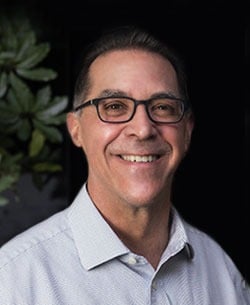
President, Advanced Brain Monitoring
Dan Levendowski is a Co-Founder and the President of Advanced Brain Monitoring. He has over 30 years of experience commercialising new technologies. He is co-inventor of 24 patented and 5 patent-pending technologies. His main focus is in the scientific validation and commercial development of the sleep medicine product portfolio. He served as principal investigator for grants awarded by the National Institutes of Health, that totaled more than $8 million of research funds to ABM. Early in his career, he has served as a Chief Financial Officer of a publicly traded company. Dan earned a B.S. from University of the Pacific and a MBA from the Andersen School at UCLA.
